
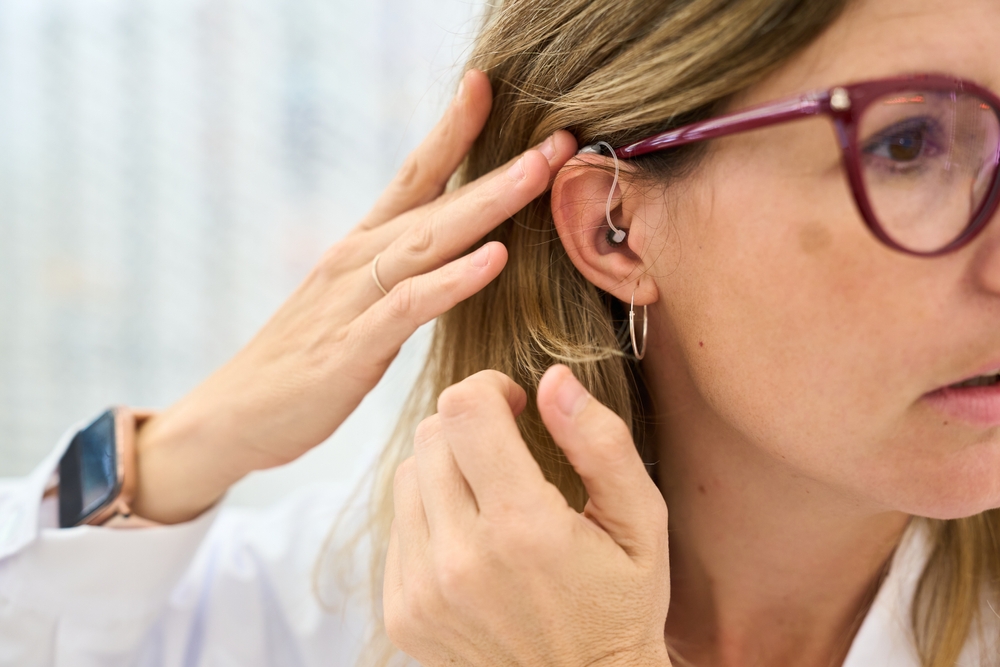
A significant number of patients postpone treating their hearing loss because they harbor concerns regarding device aesthetics and physical comfort. That defensive reaction is totally logical from a consumer standpoint! In various scenarios, patients expressed fear that wearing an obvious device would cause peers to omit them from casual conversations due to perceived listening limitations.
Consequently, this outdated, negative stereotype persists, preventing numerous individuals from seeking professional care. However, contemporary medical engineering has ensured that current hearing solutions look and function in a completely unexpected manner. Ongoing innovations in cosmetic engineering mean today’s options are ultra-small, seamlessly comfortable, and beautifully hidden from public view.
If you’ve been putting off treatment because of how hearing aids used to look, it might be time to take a fresh look at what’s available today!
The Outdated Devices of Your Imagination Have Been Replaced
When most individuals conjure an image of assistive listening technology, they envision a massive beige plastic chassis hooked over the pinna and obvious to everyone nearby. If that’s the case, you’re thinking about hearing aids circa the 1980s and ’90s.
Since then, the entire category has evolved. Continuous refinements in ergonomic styling, nanometer-scale circuitry, and digital audio engineering have radically overhauled the modern cosmetic profile. The resulting devices are beautifully downsized, highly aerodynamic, and built to match lifestyle needs by remaining completely hidden.
Many of today’s devices sit fully inside the ear canal, making them virtually invisible during everyday conversation. Different configurations sit comfortably behind the ear but feature such a low profile and featherweight build that observers naturally miss them.
Navigating Modern Hearing Technology: The Three Core Styles Evaluated
If you are curious about the structural choices available for your rehabilitation, here is an accessible overview of current styles:
Deep Canal Solutions: Invisible-in-Canal (IIC)
This specific configuration offers the highest degree of user discretion. Engineered to rest deep inside the ear canal, IIC systems are individually molded to match the precise contours of your ear. When engaging with others at standard social distances, these units are utterly unnoticeable to the naked eye. They’re a popular choice for people with mild to moderate hearing loss who prioritize subtlety.
Modern Standards: Receiver-in-Canal (RIC) / Receiver-in-the-Ear (RITE)
This is the most common style today. A tiny component sits behind the ear, connected by a nearly invisible wire to a small speaker in the ear canal. From an aesthetic standpoint, they look very similar to trendy consumer tech or modern bluetooth monitors. The vast majority of peers will fail to perceive the apparatus unless conducting a highly deliberate close-up inspection.
Traditional Behind-the-Ear (BTE) Reimagined
These sit fully behind the ear and are slightly larger, but they’re still far more streamlined than older versions. They are typically prescribed to resolve advanced levels of hearing impairment, generating exceptional sound amplification without the cumbersome weight users traditionally dread.
The bottom line is simple: modern assistive hearing systems are crafted to serve your life quietly, not to draw attention to your ears.
Modern Hearing Aids: Looking Better and Doing a Lot More
The recent metamorphosis of hearing instruments extends far beyond mere cosmetic downsizing. Today, they function more like smart devices than traditional medical equipment. Most current systems boast universal wireless syncing, channeling smartphone calls, high-definition music, and television broadcasts directly to your internal receivers.
Equipped with dedicated smartphone applications, they allow users to manipulate volume matrices or toggle environmental programs without making manual physical adjustments. If you enter a chaotic, crowded room, you can optimize your digital noise reduction settings to isolate speech within seconds. Rechargeable batteries have also replaced the tiny ones people used to struggle with. Just place them on a charger overnight, like your phone.
Overcoming the Psychological Barriers to Better Hearing
Even with this encouraging information, taking the initial step toward treatment can induce anxiety. Initiating an auditory health journey can feel emotionally taxing because it requires acknowledging that our physical baseline has shifted over time. This can make us feel helpless and like we aren’t fully in control of what’s happening to our bodies.
But here’s a different way to look at it: Hearing aids aren’t a sign that something has gone wrong. They are simply tools for managing standard lifecycle changes, which are a normal part of the human experience. Choosing to hear better is absolute evidence that you are choosing to optimize your body and enhance your overall quality of life.
Visualize the freedom of utilizing a completely covert acoustic system that restores your ability to track jokes, engage in crowded restaurants, and capture every nuance of the activities you love. Talk about empowering!
Schedule Your Personal Demonstration of Today’s Top Styles
The most effective method to permanently banish an obsolete stereotype is to personally examine current clinical options. We encourage you to drop by our office, address your concerns, and hold these miniature devices yourself with zero sales pressure. Consider it a chance to see and feel how different modern hearing aids really are.
You will likely be utterly delighted to discover how microscopic, physically seamless, and high-performing today’s options truly are! Do not let outdated myths delay your wellness—call our specialized practice or book your appointment online today.